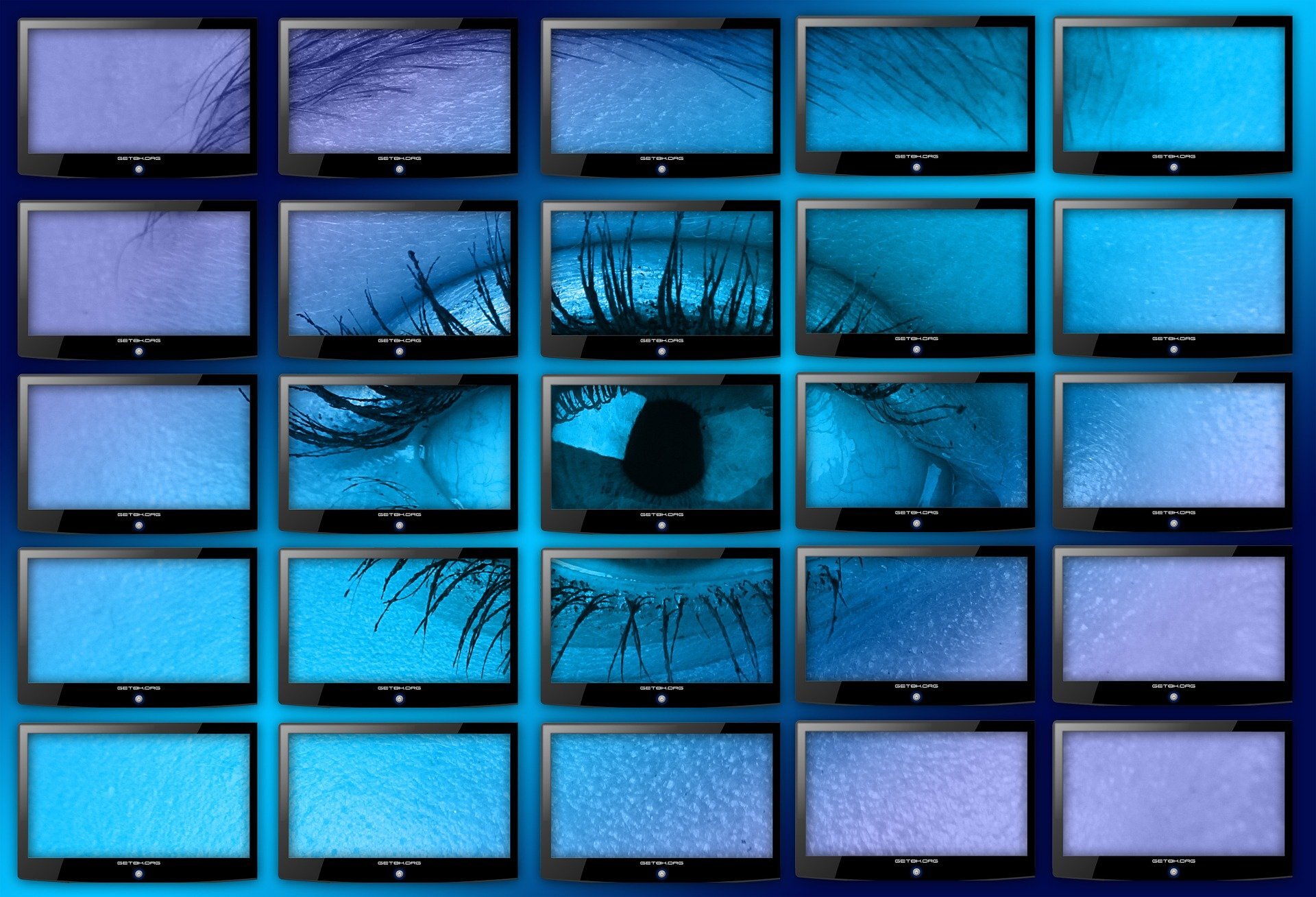
Movie theaters have an extensive amount of surveillance technology. This article is an overview of the number of surveillance used in movie theaters. In a previouse article, CBTA researchers have noted that the type of surveillance used by the movie industry is also used in warfare or in places where policy is enforced by arms such as borders. The implication is that the movie industry is in conflict with it's audience, who must be surveilled to obtain their consent and suspension of disbelief. For instance, they view their audience as liars by not trusting what they say about their emotions, and would rather rely on biometric surveillance. They therefore use biometric surveillance to get insight on how the audience truly feels about the images they see on the screen. This could be how they feel about actors, actresses, a scene, or an idea.
What this article wants to make clear is that the movie industry have enough surveillance power to traffick people and that surveillance powers that gives access to people's emotions is used for human trafficking. While they claim that they use surveillance for security and marketing, the amount of surveillance technology in movie theaters is unreasonable and can be used for purposes other than what they claim. In fact, they have confounded both state surveillance and marketing. That is, they use both state surveillance systems and surveillance for marketing, which make their use of surveillance power not only questionable, but unreasonable. The conflation of state surveillance and marketing analysis is stated in the landmark theaters privacy policy under the photos and videos of section 2 (1).
While surveillance companies say that surveillance cameras do not focus on individuals, neuromarketing surveillance systems boast the hyper surveillance on individuals at a sensory level. In fact, several TikTok posts shows that surveillance cameras can provide 10 different angles of a room with individuals at clear view (2). Infrared cameras are positioned at the top of the movie screen much like a camera on a laptop or cellphone. The following survey of cameras found in movie theaters are not exhaustive. New surveillance software and cameras are still being developed and installed.
PTZ Cameras "PTZ cameras for auditoriums are high-end cameras that can pan, tilt, and zoom to monitor crowds or detect suspicious activity. Modern setups often include infrared cameras in theaters for night vision capability and low-light surveillance cameras to cover dim auditoriums (3)." Bullet Cameras "Bullet cameras in cinemas are elongated and visible, making them a deterrent for criminals. These cameras are often placed at entrances, exits, or parking lots. Equipped with infrared capabilities..."(ibid). Dome Cameras "Dome cameras in movie theaters are typically ceiling-mounted and offer 360-degree coverage (ibid)." IP Cameras "[IP Cameras] can transfer and receive data online, providing convenient remote monitoring and controls (4)." Night Vision Cameras "[Night Vision Cameras] are supplied with infrared tech that is particularly well-suited for movie theaters. (ibid)" Fisheye Camera "A single fisheye camera can replace 3–4 conventional cameras in open lobby areas by capturing a full 360-degree view with dewarped virtual PTZ capability in the VMS (5)."
These cameras can be equipped with facial recognition software and eye tracking technology (6). Movie theaters can place as many cameras as they want because cinemas are considered public-facing places like stadiums or airports. Audiences need to ask who has access to their private information and at what level. While it can be assumed that these are used for security, any other usage of personal information is not exempt. For instance, it is known that executives will retaliate against fans by gathering information about them using surveillance cameras meant for security (7). This positions the audience as an enemy that must be watched by surveillance. This is one level of surveillance. There is also a biometric level, which focuses on the audience's biometrics. From here, those who surveille can manipulate, control, and manage their audience. If the movie theaters had apanopticon, then it would be a prison.
The focus on the audiences' biometrics presupposes that the audience is unreliable in telling the truth about themselves. And these are proven through the surveillance of their sensory traits. Whether an individual is good or bad is determined by how an audience reacts to an image on a movie. Such technology is often used for interrogation. Emotion recognition technology is experimented on Uyghurs in China (8). In this way, the audience experience being under interrogation while under suspension of disbelief. In fact, one of the reasons that the movie industry claims that biometric surveillance must be used is to bypass the liar effect, which supposes that audiences will always lie about their experience of the movie. Biometric level information such as these are of interest to directors, actors, and producers, who will use such insights to know what to show their audiences. They no longer have to tell a story when they can press their audiences' sensory cues. The key issue here is that private and sensitive personal information is being circulated without the audience's consent or awareness. The movie theater's conflation of security and marketing surveillance results in unconsensual circulation of PPI's and SPI's. An infrared camera used for security can be equipped with eye tracking software and AI biometric technology to analyze audience behavior for marketing analytics. In this way, surveillance in movie theaters is much more invasive that the surveillance found in airports or the streets. More research must be done regarding the extensive network of surveillance by the movie industry.
In fact, while facial recognition bans have been proposed for use in policing, no proposal have been made against the use of automated facial recognition and eye tracking technology in movie theaters, which can simply be installed on infrared cameras. Movie theaters have been using automated facial recognition technology way before it has been used in other places (9). Because the development of these surveillance systems have been unquestioned in movie theaters, CBTA suspects that surveillance systems are being placed in peoples' homes. A simulation of homes planted with surveillance have been made at a research institute dedicated to neuromarketing (10).
This amount of surveillance powers is subject to abuse. The true concern is the abuse of surveillance powers. The investigation of CBTA have concluded that these forms of abuse results in human trafficking. The invasive surveillance of emotions for consent, the harvesting of biometric information, and the pervasive amount of surveillance against an individual show a motive and an act to exploit the human body's sensory mechanism to force consent. The human body is valuable to the entertainment industry. The transition from physical media into digital media will increase the pervasiveness of surveillance. Digital media allows for the integration of surveillance. This is why we should be concerned about the entertainment industry. They can surveille when we watch, listen, and play.
We, as consumers, must say that we do not want surveillance in our homes. We must let lawmakers and those in the entertainment industry know that the amount of surviellance in movie theaters is not in keeping with the peaceful activity of enjoying leisure whether it's watching movies at home, in the theaters, or playing video games. Otherwise, these surveillance powers will be found in every home, creating a greater risk for human trafficking.
Spread awareness by sharing this article about surveillance in movie theaters. Anyone who watches movies in the theaters or at home has the right to know that their biometric information is being gathered by surveillance. Just simply knowing that there are cameras in places where we expect to be privateis the first step in bringing this issue to lawmakers. Currently, legislation regarding surveillance of biometrics is lacking. Lawmakers need to pass legislation that will protect consumers from the abuse of great power.
(1) https://www.landmarktheatres.com/privacy-policy/. "Audio, Video, and Sensory Data – This may include audio recordings, video recordings, photos (through CCTV and for customer testimonials or pop-up events and immersive experiences you attend with your consent), customer service interactions via email, phone or website forms."
(2) https://www.tiktok.com/@things_y0u_sh0uld_kn0w/video/7210013918196993285
(3) https://techymeter.com/do-movie-theaters-have-cameras/#Do_Movie_Theaters_Have_Cameras_Inside_the_Auditorium
(4) https://fixthephoto.com/do-movie-theaters-have-cameras.html
(5) https://www.2mtechnology.net/do-movie-theaters-have-security-cameras/ The transition from physical media to digital media.
(6) https://surveillant.ai/solutions/movie-theater-security-cameras
(7) https://www.wired.com/story/madison-square-garden-jim-dolan-surveillance-machine/
(8) https://www.bbc.com/news/technology-57101248
(9) https://mashable.com/article/disney-facial-recognition-prediction-movies
(10) https://www.neurosciencemarketing.com/blog/articles/disney-secret-neuromarketing.htm